
what I ate in Oman
+ notes on a blended desi-arab culture

I took a far-too short and somewhat impulsive trip to Oman with my sister recently. We didn’t plan much, and chose instead to land in Muscat, grab a rental from the airport, and simply go where the day took us. We relied almost entirely on recommendations from the exceptionally warm and friendly locals and tourists we ran into during our short three-day stay. In spite of this, we managed to eat very well. Not that a meticulously planned trip can’t be enjoyable, but there is something incredibly rewarding about travelling to a place with no real agenda, and letting chance take care of the rest. You simply don’t know what you’re going to experience, and this makes the simplest joy feel exhilarating, or the largest setback feel like a laughable inconvenience. The more I travel, the more room I want to leave for the unplanned parts of travel: off-the-cuff conversations at a mosque that may take you somewhere new, aimless drives that could bring you to a coastal town you’ve never heard of before, and ordering off a menu only to be underwhelmed by a soup, or perhaps bowled over by a stew.
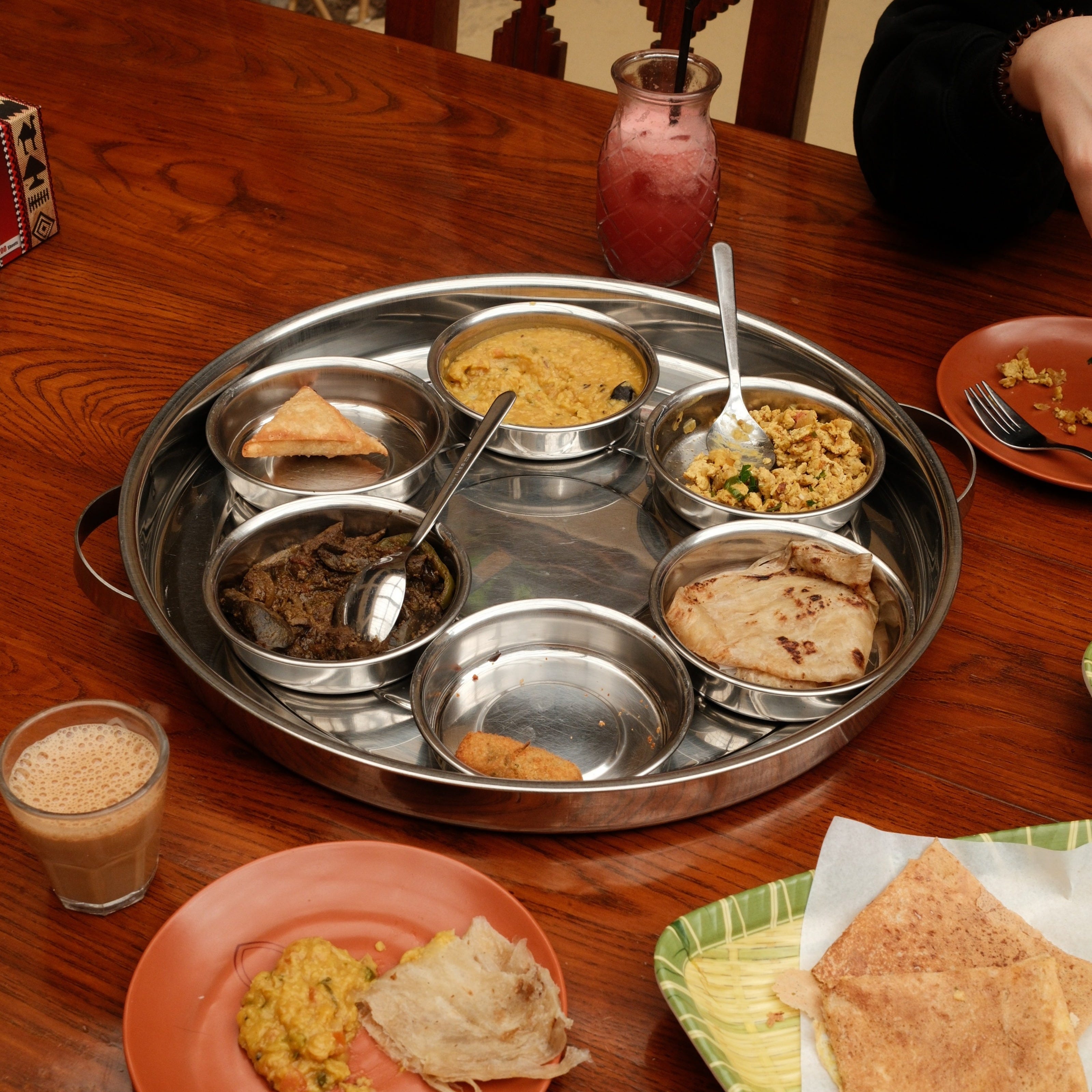
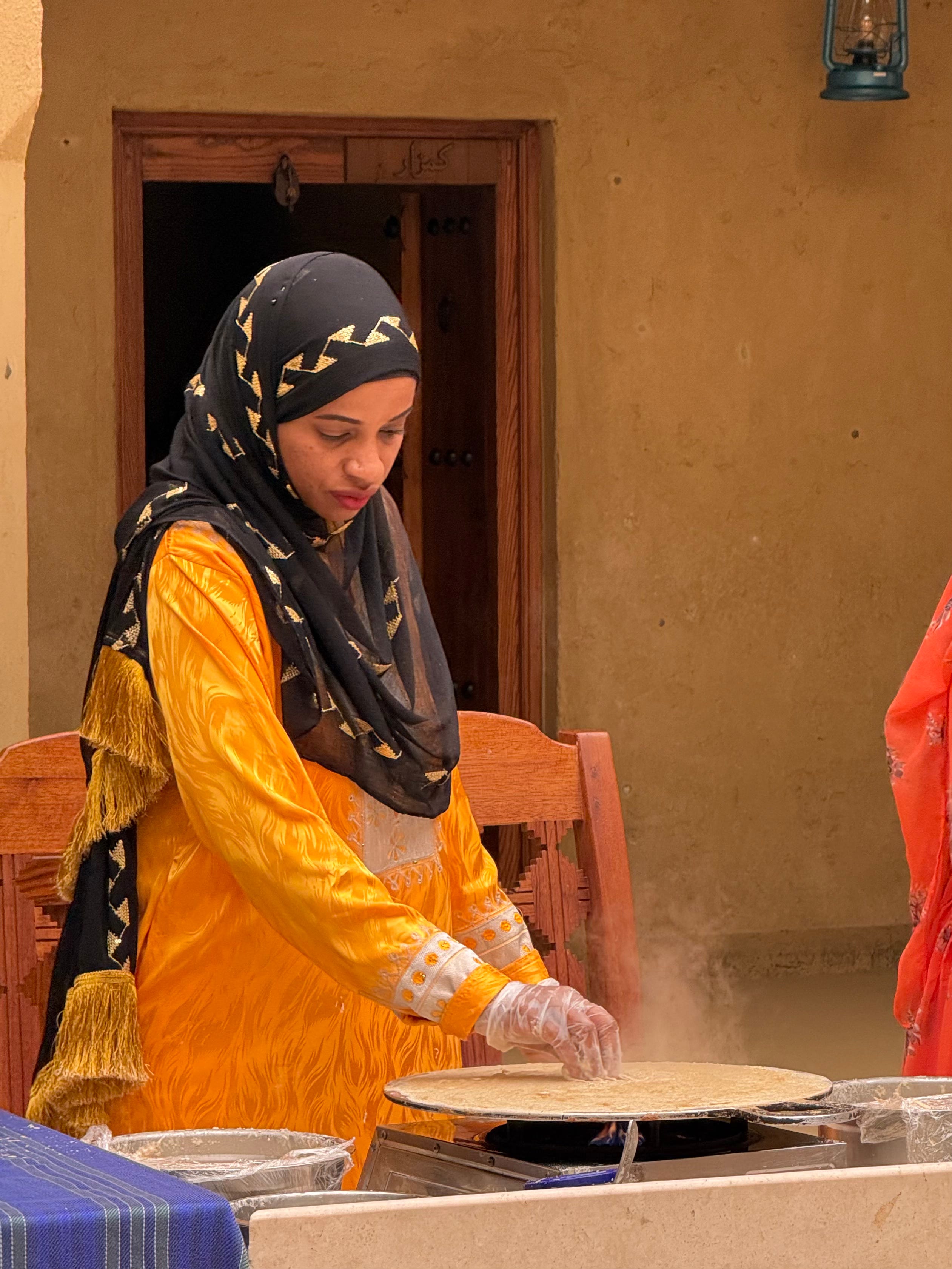
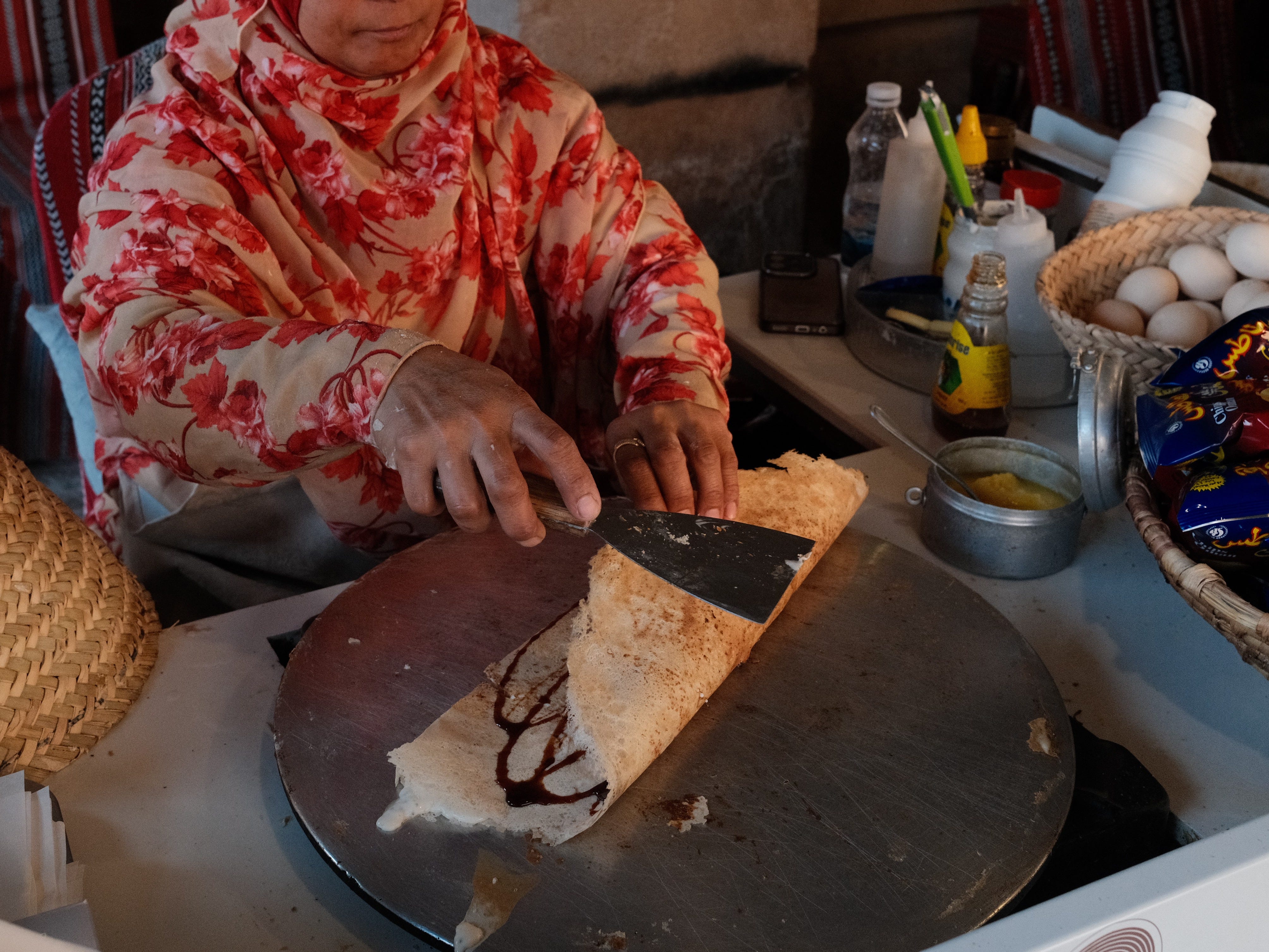
On the advice of Muhammad at the airport car rental counter, we decided to go to Rozna for a traditional Omani breakfast. On our breakfast platter: fried liver, scrambled eggs in tomato, kachori (boiled and fried potato), samosa, a lentil curry, and paratha. To this we added khubz al-rekhal, an irresistible, crispy, paper-thin bread (basically a dosa) cooked on a griddle and filled with eggs, cheese, or honey. If you’re familiar with either Arab or South Asian food, the influences of both on the Omani breakfast are pretty obvious. Omani cuisine feels like a fascinating blend of Arab and South Asian: both cultures seem to exist in harmony here, creating something entirely unlike the food of Saudi Arabia, where I grew up, or really any of its neighbour countries.
I mention this to our server, himself an immigrant from Kolkata in India, and he tells me about Balochi Omanis, an ethnic minority in Oman originally from Balochistan (modern-day Pakistan and Iran) to which much of this cultural blend can be attributed. Later, on our drive to Nizwa, my sister reads the Wikipedia entry on Oman out loud to me, and we learn about Oman’s sea trade and conquests in Zanzibar, Pakistan, and Persia. This made the blended desi-Arab culture of the country easier to understand, but continued to take me by surprise for the remainder of my trip. Most Arab countries—particularly wealthy ones like the UAE, Qatar, and Saudi Arabia—run on a set of policies and norms that create an undisputed social order: Arabs first, everyone else later. Assimilation is not encouraged or even expected, the way it may be if you immigrate to Europe or America. If you’re a South Asian living in one of these countries, there is usually an stiff air of haughtiness you get used to when interacting with Arabs. Of all the countries in the Middle East that I’ve visited, Oman seemed to resist the influence of South Asian culture the least. I saw this in not just the food, but also the clothing (Omani women wearing kameez-salwar) and the language (many Omani people knew basic Urdu/Hindi). In souqs and mosques, I met immigrants from Bangladesh, Kashmir, and Gujarat who expressed a fondness for Oman that I, after having lived nearly fifteen years in Saudi Arabia, struggled to relate to.
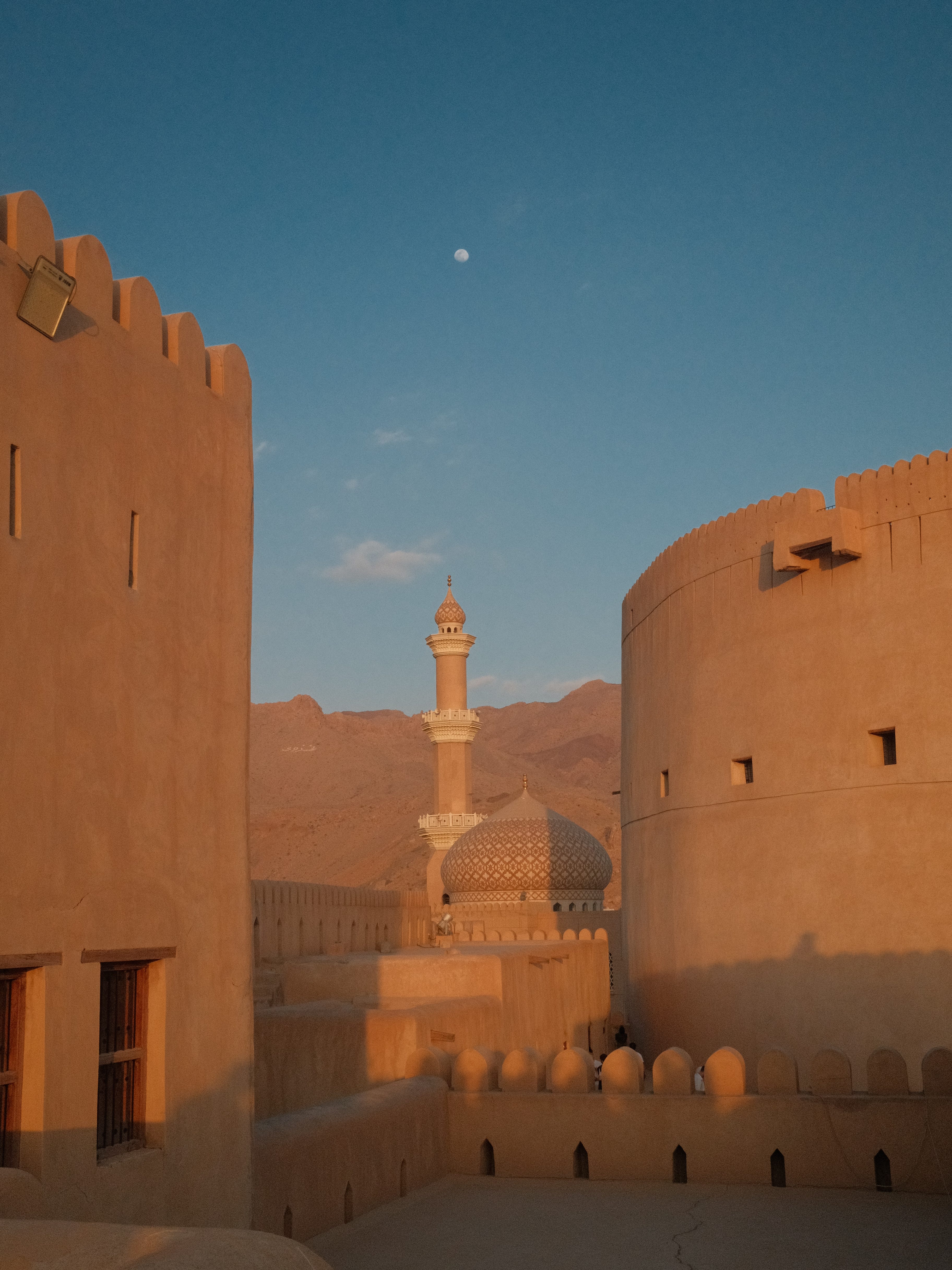
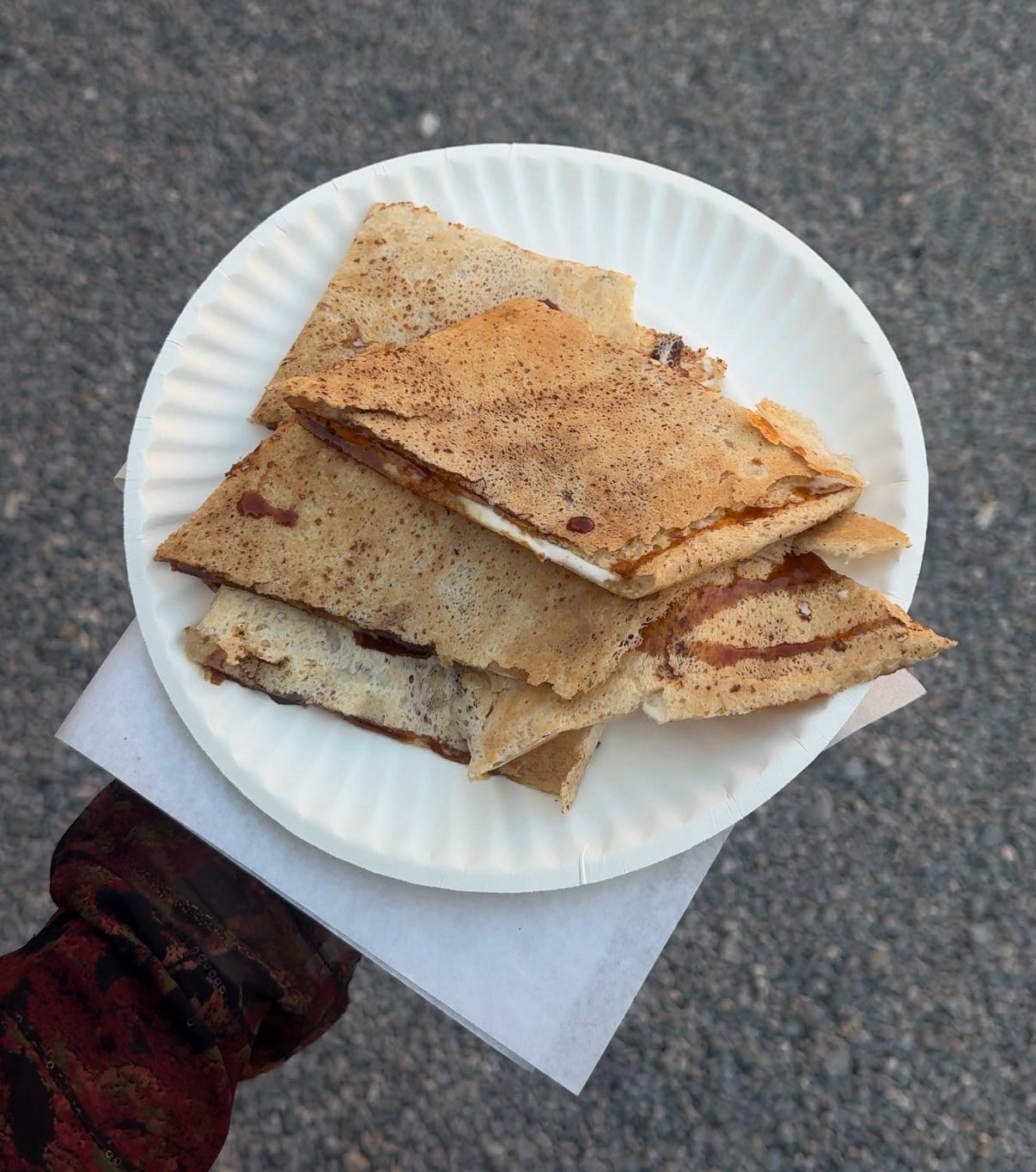
In the old city of Nizwa, I saw a man eating the same dosa-like khubz off a paper plate and asked him where he got it from. He pointed to a stall behind me and after a few minutes of conversation, walked over with me and generously treated me to one himself. He ordered it for me “the traditional way”, folded in a briny and stretchy cheese and local sidr honey, and drizzled with date molasses. We eat it while walking around Nizwa Fort.
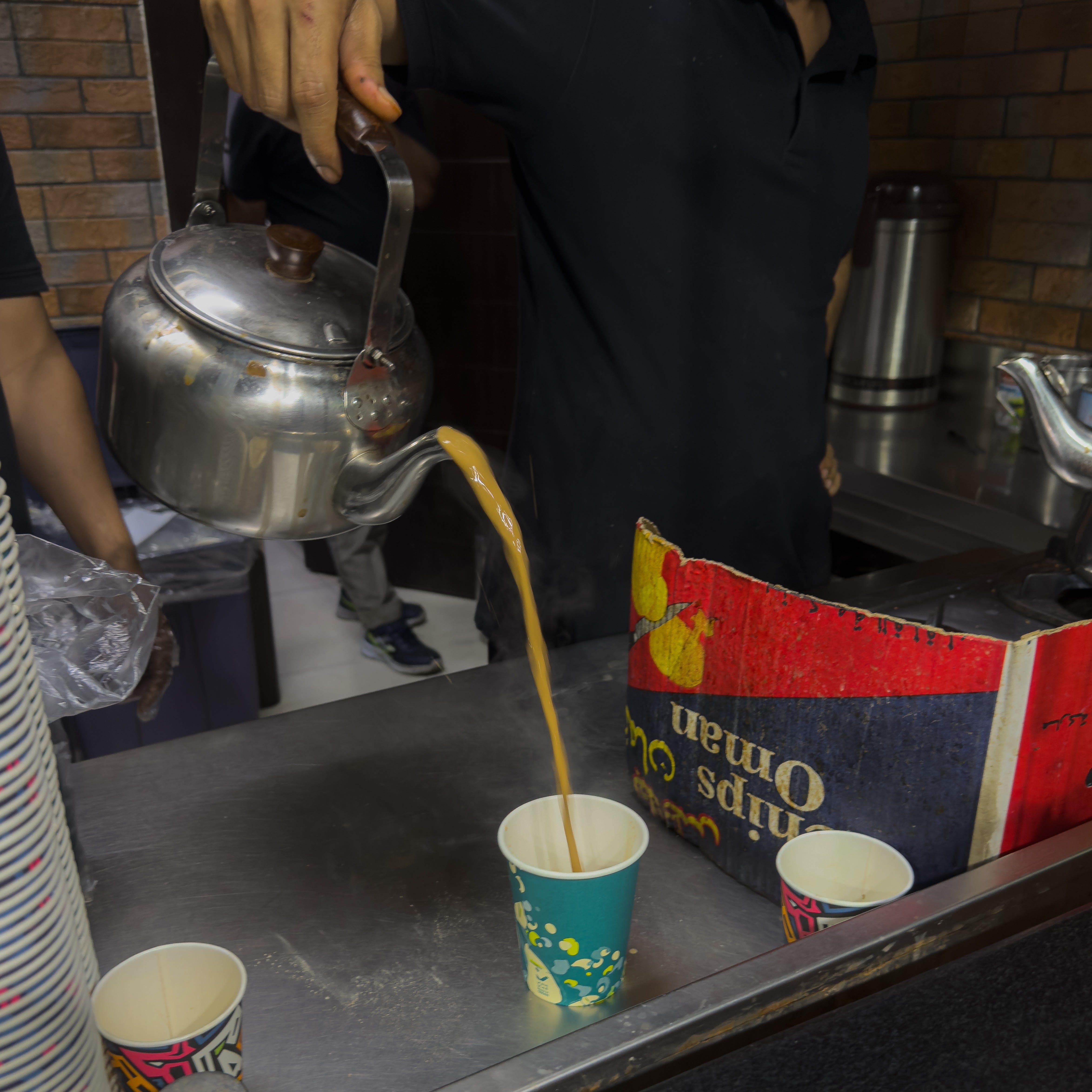
On the drive back, we stopped only once for gas and a glass of strong karak chai. This is pretty much the only hot beverage I always consume sweet because of how it is prepared: sugar isn’t the final addition to the drink but instead the first ingredient you start with, cooking it into a caramel first before the addition of tea and milk.
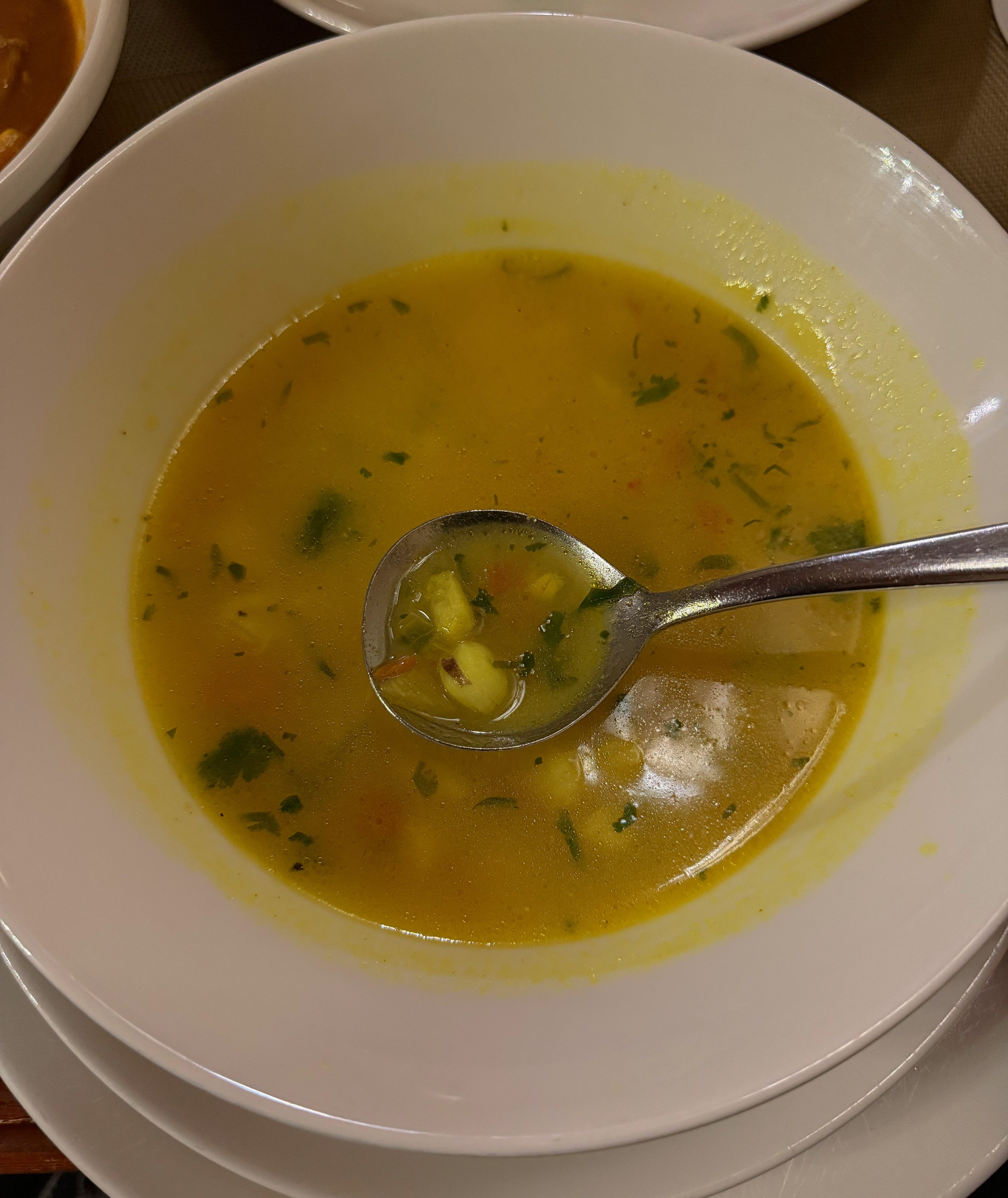
Back in the old Muttrah area of Muscat, my sister and I were famished. From our hotel, we walked along the corniche to Bait Al-Luban for dinner that we ate sitting cross-legged on a majlis. We ordered a full spread, but my favourite thing on the menu was babloh—a brothy, sour, unctuous turmeric-coriander fish stew made with both fresh and dried Omani limes. It was so good that we came straight back here the following night to order it again. Other things we got: manshab (a tuna fish stew cooked in a coconut milk broth of cinnamon and cardamom from Dhofar in the south), mchicha wa nazi (Zanzibari-style coconut-creamed spinach), gheleambe (a watercress-shallot-tomato salad marinated in a dried Omani lemon dressing). Nothing for dessert except the complimentary Omani dates they brought us with the bill.
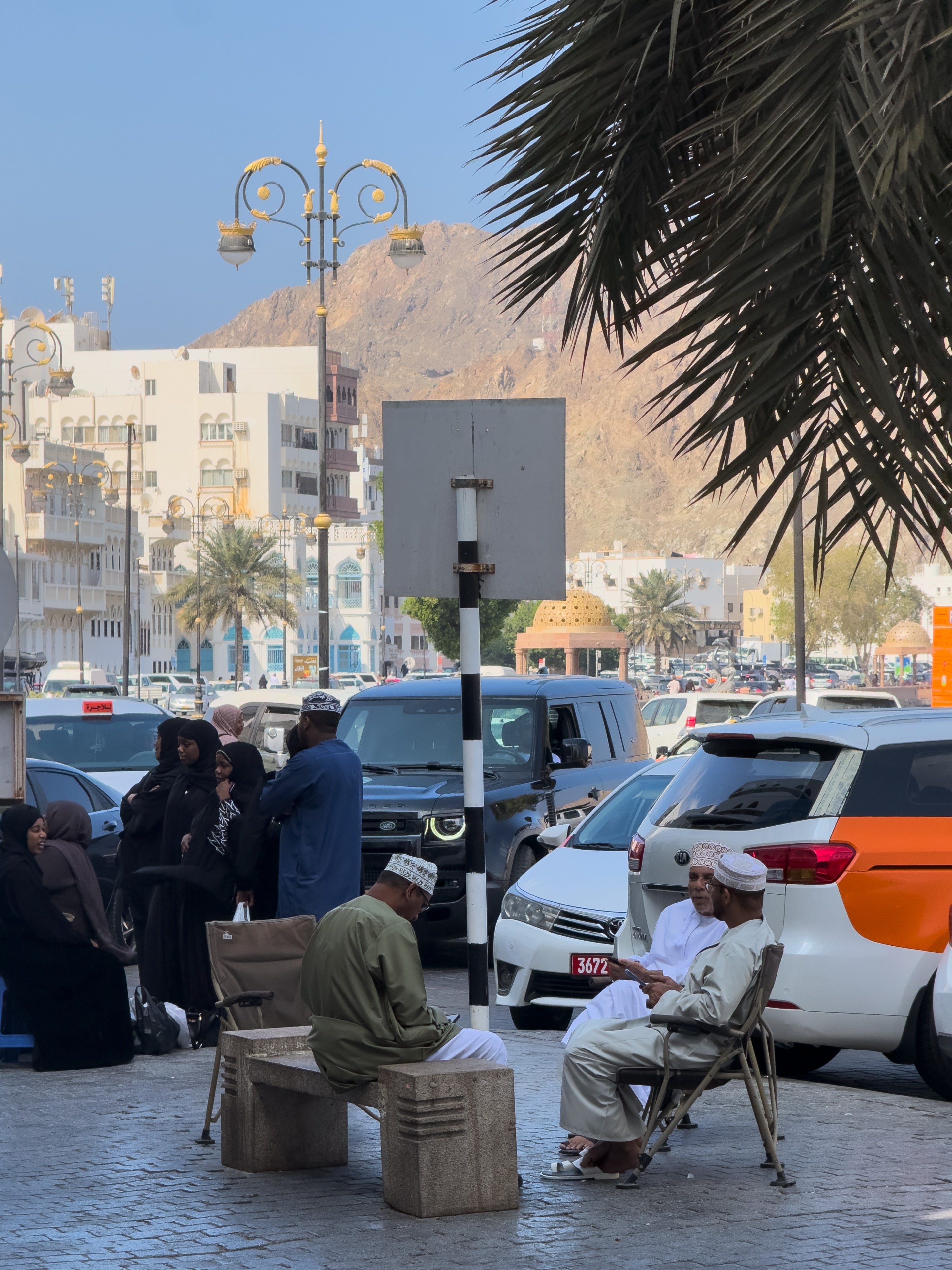
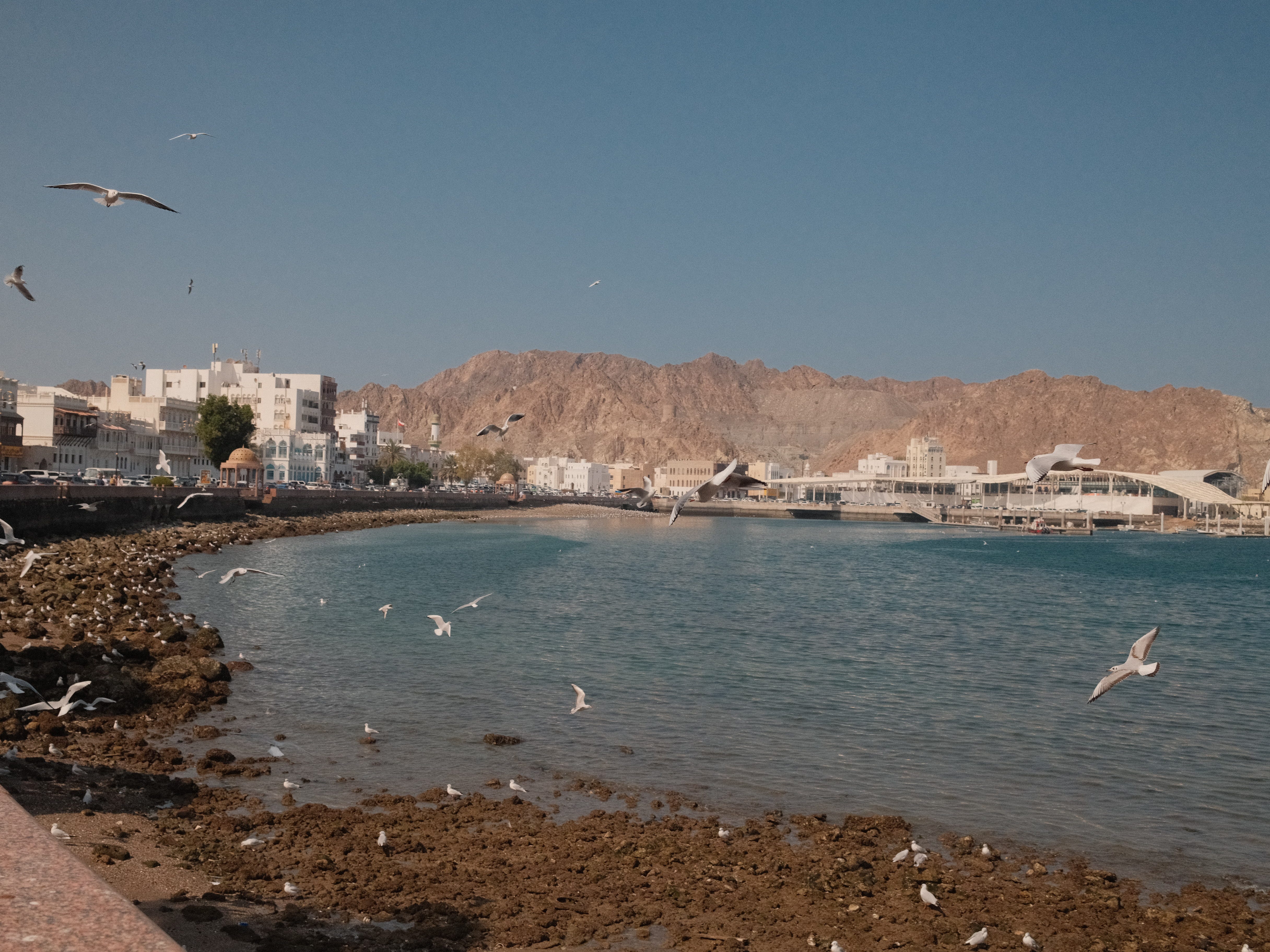
The next morning, we had an unassuming brunch: fresh carrot-orange juice, karak chai, and, local shawarma—this was served to us in a paratha, another one of the many ways that Arab and South Asian cuisine exist in harmony here. The real treat was eating it streetside while Muttrah bustled all around us: taxi drivers milling around the stands with their tea, storefronts shuttering open, cats lurking around in street corners, tourists and seagulls swooping around, and a balmy sea breeze that rustled through it all, signalling a beautiful day ahead.
Plans for when I’m next in Oman: shuwa (marinated lamb or goat slow cooked in an oven), balaleet (vermicelli-egg breakfast dish), qabooli (a fragrant Omani-style pulao), all the wadis we didn’t have time to drive to, the open markets of Salalah, and more of the sea, the sea, the sea.

stunning pictures and reflections! planning a trip right now, this made me even more excited
throughly enjoyed this and your beautiful photos