
everything i read in 2025
skip the first half of this if you just want the books (why would you do that)

notes on reading
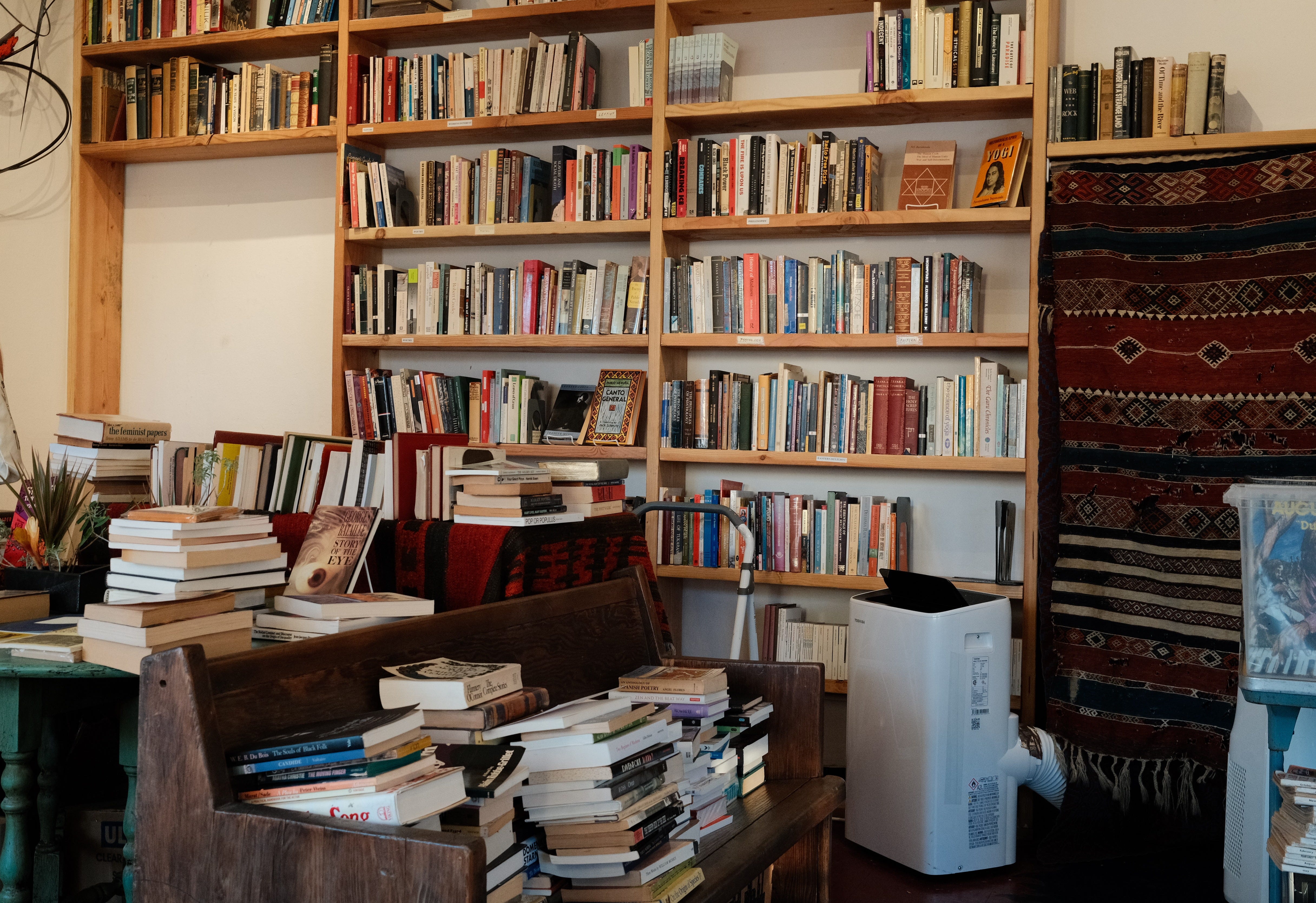
Before the actual books, first, some quick thoughts on reading. In Annie Dillard’s The Writing Life, she says:
“The reader’s ear must adjust down from loud life to the subtle, imaginary sounds of the written word. An ordinary reader picking up a book can’t yet hear a thing; it will take half an hour to pick up the writing’s modulations, its ups and downs and louds and softs.”
Reading, is by definition, a solitary activity. A one-way conversation between the writer and the reader. In contrast to the giant screens and engineered sound and congressional nature of cinema, to open a book may seem like voluntarily blinding yourself. You are deprived of most senses except the contents of a page and are being asked to do the most. To imagine. To fill in the blanks. It is an anti-social activity; there is no readerly analogue to watching Die My Love with your friends at the cinema and spending longer than the movie’s runtime mercilessly dissecting how awful it was. Or hosting a watch party for The Pitt. These days, while I’m home, the family assembles around the television in the evenings to watch Pakistani soap operas, and it is a way for us to bond, laugh, and argue. These experiences have their place in this world. But Dillard’s words offer a compelling explanation as to why we might be reading less: we are not ready to turn the volume down.
The counterpoint to this is that you don’t need to read in order to live a fulfilling life. This is obviously true. You can do lots of interesting things to fulfil you. Whip billowy meringue. Test the waters of a lake. You can fly, or box, or sing. That said, my return to truly enthusiastic reading this year made me realize that I didn’t stop reading over the last few years because I found something better to do. I stopped reading because I simply couldn’t. I was, as Dillard says later, waking up to watch television, and instead missing the show: “My brain was a sieve; a deluge of content and information was flowing through it and I wasn’t retaining much of any of it. I was dropping each thought I had in my mind like it was a hot potato, leaving a trail of steaming Yukon Golds in my wake as I set off in search of—what”?
Luke McGowan-Arnold had something similar to say in a post about the endless scroll: “The problem with the endless scroll is that it distracts us from this purpose in ways that are universally unhelpful. Instead of reading a novel or watching a film, I was engaging in the endless scroll. I have NEVER watched a TikTok that made me want to go write or create something. All I did was make me want to watch another TikTok”.
Even as I say that I wish people read more—not instead of other things but in addition to—I inwardly cringe. I wonder when it became gauche or even condescending to implore more people to read. Echoing this sentiment by Zito Madu, before film and television entered our lives, reading is what people used to do. It was a pastime of the masses—and of the incarcerated1. Framing it as something that is exclusively the domain of the academically minded or the snobs or whatever does a huge disservice to the power that literature has to shift the plate tectonics of our world, to force us to step outside of ourselves and into the minds and lives and vagaries of another. In fact, I would go as far as to say that reading is not really an anti-social activity at all, it is a uniting and galvanizing one.
two standouts
There were two books this year that I made my friends read by simply buying or lending them copies, because sometimes, your friends don’t know what’s good for them, and you do.
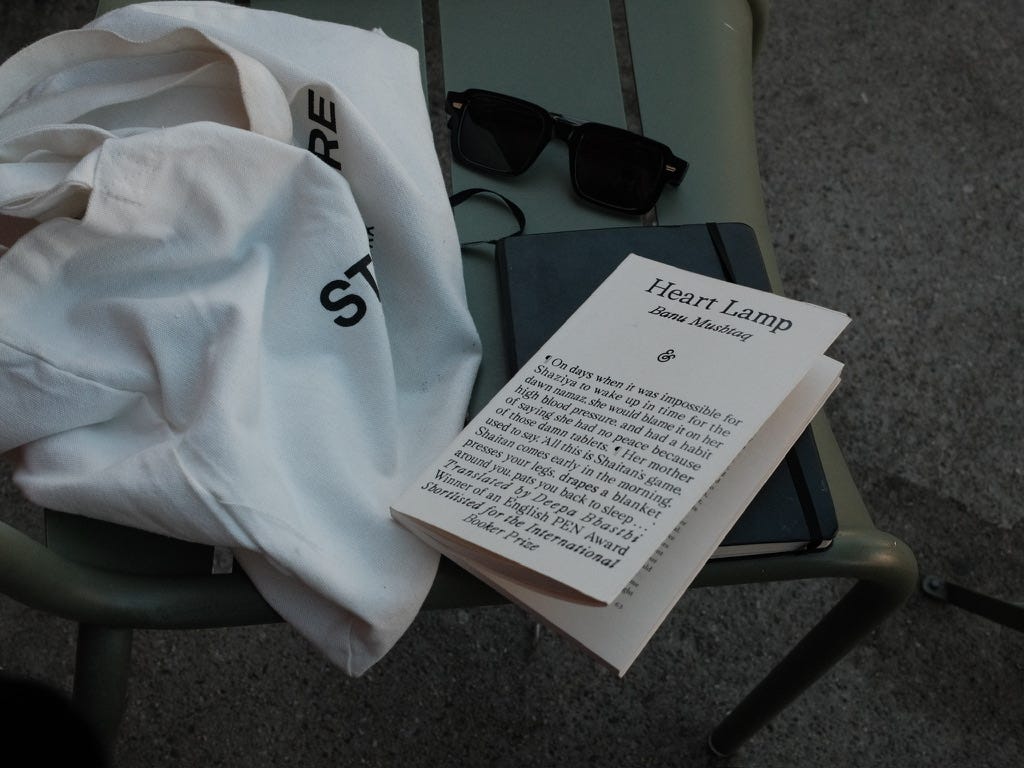
The first is Banu Mushtaq’s Heart Lamp, a collection of short stories translated into English from Kannada, and my favourite book of the year. Mushtaq’s style of writing is quiet, comical, poignant, and excoriating all at once, and her characters feel as real as the women I grew up around. One way to read her stories is through a feminist lens: Mushtaq is an activist and lawyer and a part of the Bandaya movement2, and all her stories are about women navigating some sort of patriarchal system. What felt like a true revelation however, was just the simple experience of reading stories that linger on the everyday lives of Muslim women. These characters usually exist in the margins of society, and yet in Mushtaq’s stories they become interesting. Their silent desires and simmering resentments and fickle hearts are brought to center stage, they are engines of change, at times even agents of chaos. My favourites from the collection: “A Decision Of The Heart”, “Black Cobras”, “The Shroud”, “Be A Woman Once, Oh Lord”!
The second was Rohinton Mistry’s A Fine Balance, bought in Delhi’s Khan Market, and read in a fever dream over the course of a week. You can read a synopsis online, but the reason this book stuck with me was of its depiction of poor people. Two of the four protagonists are lower-caste villagers who (to put it lightly) have to endure a series of hardships. Mistry’s writing confers a lot of dignity on these characters. Even when they’re miserable or unlucky or really destitute, it’s clear that they have a strong sense of self, and that they respect themselves. A lot of people don’t want to consider themselves “the same” as poor people, as though poverty is a contagious disease. Even charity is an act that imbues wealthy people with a sense of hierarchy: it is less about solidarity, or person-to-person respect, and more about a “bigger person” giving to a “smaller person”. Watching these dynamics play out over a novel that spans decades made for an unpleasant, but memorable read (and reinforced the belief that the caste system in India is one of the great evils of our time on this Earth).
everything else i read in 2025
My year in reading started out slow. I read better in the second half than I did the first. I try to read as broadly as possible—fiction and non, politics and romance, sci-fi classics, essays and novellas. The rest of this section is ordered roughly chronologically, and I’ve tried to group it by theme.
For most of this year, I have in slow bits and pieces read Azad Essa’s Hostile Homelands, which puts India’s relationship with Israel in its historical context. It’s a persuasive, well researched and fairly comprehensive account of India’s changing position on Palestine since 1947 and its decades long relationship with Israel that it has used to further its own military agenda, particularly in Kashmir. I haven’t finished it yet (I have half of the last chapter left), but I already recommend this. This, by the way, is often how I read some books, particularly when they are are non-fiction. Some books are simply too dense and information packed to read beginning to end over a week or two. Better to let them slowly ingratiate themselves to you over time. Go back and reread a chapter sometime. When something is referenced but not explained, look it up. Sit in that Wikipedia hole. Then one day, return to the text. That is how I read some books3. I also read (but didn’t finish) Perfect Victims by Mohammed El-Kurd, No Straight Road Takes You There by Rebecca Solnit, and Empire of AI by Karen Hao. All compelling reads that I am no hurry to finish for the sake of finishing.
In the spring, I read the English translation of I Who Have Never Known Men by Jacqueline Harpman, which I stayed up all night to read. Published in 1995, this book is having somewhat of a renaissance at the moment, and I recommend it. My advice is to go in blind and let the novel take you where it will. It’s a bewildering, uncanny read, and I loved the ending. Kaveh Akbar’s Martyr! didn’t do much for me, unfortunately. But I did read it all.
I interspersed many of my dense, slow reads this year with light hearted fiction. Plain fun. I had a pleasant time reading Emily Henry’s Beach Read (which I seemed to be the last person to read) and her latest, Great Big Beautiful Life (which I read the day it came out). A confession: I am an enjoyer of Emily Henry. Her premises are outlandish, and the male protagonists of her many books begin to blur together—they are all some fantastical combination of smart, interesting, ambitious, well-built, well-read, and tender-hearted? In some ways, she is a cautionary tale against letting women write romance (just kidding) (no I’m not), but as I say, her books are fun. One Dark Window by Rachel Gillig was an impulsive mistake. Butter by Asako Yusuzki was also a let down. I can’t even remember why I disliked it, but I picked it up because the premise and the book cover immediately intrigued me. By the time I was halfway through the novel, it was a daily chore to force myself to read it.
I abandoned Butter in favour of The World With Its Mouth Open, a collection of short stories set in Kashmir, which I savoured all throughout June. Favourites from this set: “Beauty” and “Flowers For A Dog”. After this, I read Sadaf Wani’s City as Memory, a part-memoir, part-historical account of Srinagar’s evolution as a city. At Srinagar’s Sunday Market later in the summer, I picked up Murakami’s short story collection Men Without Women on a whim and thoroughly enjoyed reading it. I haven’t read much Murakami, but I personally like his matter-of-fact style of narration. The story “Kino” was a particular standout. I followed this with another short story collection, Lorrie Moore’s Self-Help which I had a less positive experience with. Moore’s work is critically well-received within the US, but I think her style is just not for me.
I enjoyed each one of the next three of books in different ways and recommend them all, particularly for their memorable prose: Aftermath by Rachel Cusk, A Room of One’s Own by Virginia Woolf, and Home Cooking by Laurie Colwin. Aftermath is a sparsely written, evocative memoir of divorce. A Room of One’s Own is an extended essay on the topic of the self-expression of women, their need for money and a “room of their own” in order to write. Parts of it admittedly lagged for me (the ideas in it are hardly groundbreaking) but I was so charmed by Woolf’s sharp, stream-of-consciousness style prose:
What is meant by “reality”? It would seem to be something very erratic, very undependable—now to be found in a dusty road, now in a scrap of newspaper in the street, now a daffodil in the sun. It lights up a group in a room and stamps some casual saying. It overwhelms one walking home beneath the stars and makes the silent world more real than the world of speech—and then there it is again in an omnibus in the uproar of Piccadilly. Sometimes, too, it seems to dwell in shapes too far away for us to discern what their nature is. But whatever it touches, it fixes and makes permanent. That is what remains over when the skin of the day has been cast into the hedge; that is what is left of past time and of our loves and hates.
Home Cooking is a collection of simple, yet profound essays on the joys of home cooking and hosting, two principles I deeply believe in. Eating is one of life’s great pleasures, and especially when you prepare the food yourself, and it was gratifying to read the words of someone who wholeheartedly agreed with me.
Three sci-fi/fantasy books from this year that I devoured and read in the span of 1-2 days: Robert Jackson Bennett’s vivid and colourful fantasy-murder mystery, The Tainted Cup and its sequel, A Drop of Corruption, and Andy Weir’s men-have-fun-in-space Project Hail Mary. Jackson Bennett took me by surprise because he won the Hugo for The Tainted Cup in 2024, and I have historically not gotten along with Hugo Award winners (I started and abandoned Arkady Martine’s A Memory Called Empire this year, which I have to respectfully say was a total waste of my time). I can’t wait for the conclusion to his trilogy, out this year.
December was a good month for reading. After starting it in September, I finished reading Short Cuts, an excellent collection of Raymond Carver short stories curated by Robert Altman for his film of the same name. I find Carver’s stories kind of nihilistic: his characters seem to have little agency or self-awareness about their motivations and it can be frustrating as the reader, can usually identify their inner desires. But it just works for me, and I want to read the rest of his work. Favourites from Short Cuts: “Collectors”, “Tell The Women We’re Going” and the best of them all, “A Small, Good Thing”.
On a friend’s recommendation, I read Ghachar Ghochar by Vivek Shanbhag (translated from Kannada by Srinath Perur) which I found utterly delightful. There’s nothing else for me to say about it other than you should go and read it right now for its shot-chaser experience of levity and poignancy. It was very evocative of my beloved Heart Lamp—I knew when I read the opening paragraph, that I was in for a treat.
Miscellaneous
I reread sections of some books for some reasons or the other. I want to highlight those books here because I consider rereading to be an essential part of reading. It’s also why—sorry!—I believe in building a personal library. These were: Son of Elsewhere by Elamin Abdelmahmoud, Slouching Towards Bethlehem by Joan Didion, Beautiful World, Where Are You? by Sally Rooney, Trick Mirror by Jia Tolentino, Wanderlust by Rebecca Solnit (an evergreen reread for me), The Age of Surveillance Capitalism by Shoshana Zuboff, The Interpreter of Maladies by Jhumpa Lahiri, Malgudi Days by R. K. Narayan, Muhammad: His Life Based on the Earliest Sources by Martin Lings, and Memories of Muhammad by Omid Safi.
In 2026
I read very temperamentally. Planning out what I want to read even in the span of a month is kind of pointless exercise because more often than not, I abandon my plans and follow my whims. Still, for some reason, here’s what I’m currently interested in.
In December I finally began reading Crime and Punishment. I’m about halfway done and making my way through it at a leisurely pace. It’s really working for me, and would love to continue reading Dostoevsky into 2026. I already have a copy of White Nights, so perhaps that. I’m hoping I finally get to Thoreau’s Walden this spring. I’m intrigued (intimidated) by Chess Story by Stefan Zweig and The Sea, The Sea by Iris Murdoch.
Some new-to-me authors I’d like to read more of in 2026: Rachel Cusk, Virginia Woolf, and Vivek Shanbhag.
I’ve heard polarizing things about Szalay’s Booker-prize winning Flesh; I want to mostly stay away from recent releases but I may pick this up just to see what the fuss is about. Also Dur e Aziz Amna’s A Splintering.
Generally, if I can find a cheap used copy of a book that I already want to read, I am much more likely to read it. A friend recommended The Savage Detectives by Roberto Bolaño to me; I came across it in a used bookstore later that week. Also recommended to me was John Berger’s Sense of Sight, which I also was able to find a used copy of. Ditto for Rebecca by Daphne Du Maurier.
Short fiction is going to be an intentional focus of mine in 2026 (simply because I enjoy the form so much). On my bookshelf is Gish Jen’s Who’s Irish?, Sandra Cisneros’ Woman Hollering Creek and Other Stories, R. K. Narayan’s Malgudi Days (currently rereading), In Other Rooms, Other Wonders by Daniyal Mueenuddin, and some Chekov collections. I also want to read another collection by Carver, likely Cathedral4.
I always try to read something related to Islam around Ramadan and this year, I have my eye on The Road to Mecca by Muhammad Asad.
Quoting from the translator’s note: “Bandaya means dissent, rebellion, protest, resistance to authority, revolution and its adjacent ideas; combine it with sahitya, meaning literature, and we get the name of a short-lived but highly influential literary movement in the Kannada language in the 1970s and ‘8os. Bandaya Sahitya started as an act of protest against the hegemony of upper caste and mostly male-led writing that was then being published and celebrated. The movement urged women, Dalits and other social and religious minorities to tell stories from within their own lived experiences and in the Kannada they spoke.”
It’s become somewhat of a running personal joke that I am sort of always reading David Graeber’s Debt, a long and very dense biography of debt in the context of social institutions such as barter, marriage, and government. Reading that book genuinely makes me feel stupid.
This was a wonderful read. Thank you, too, for reading and reviewing Hostile Homelands.
welcome to Substack!